One of the biggest factors in whether change succeeds or stalls is whether people are helped to see the choices involved before the change begins. When the trade-offs are left implicit, people tend to default to protecting the present rather than investing in the future. Embracing Change Means Trading Short-Term Pain for Long Term Gain.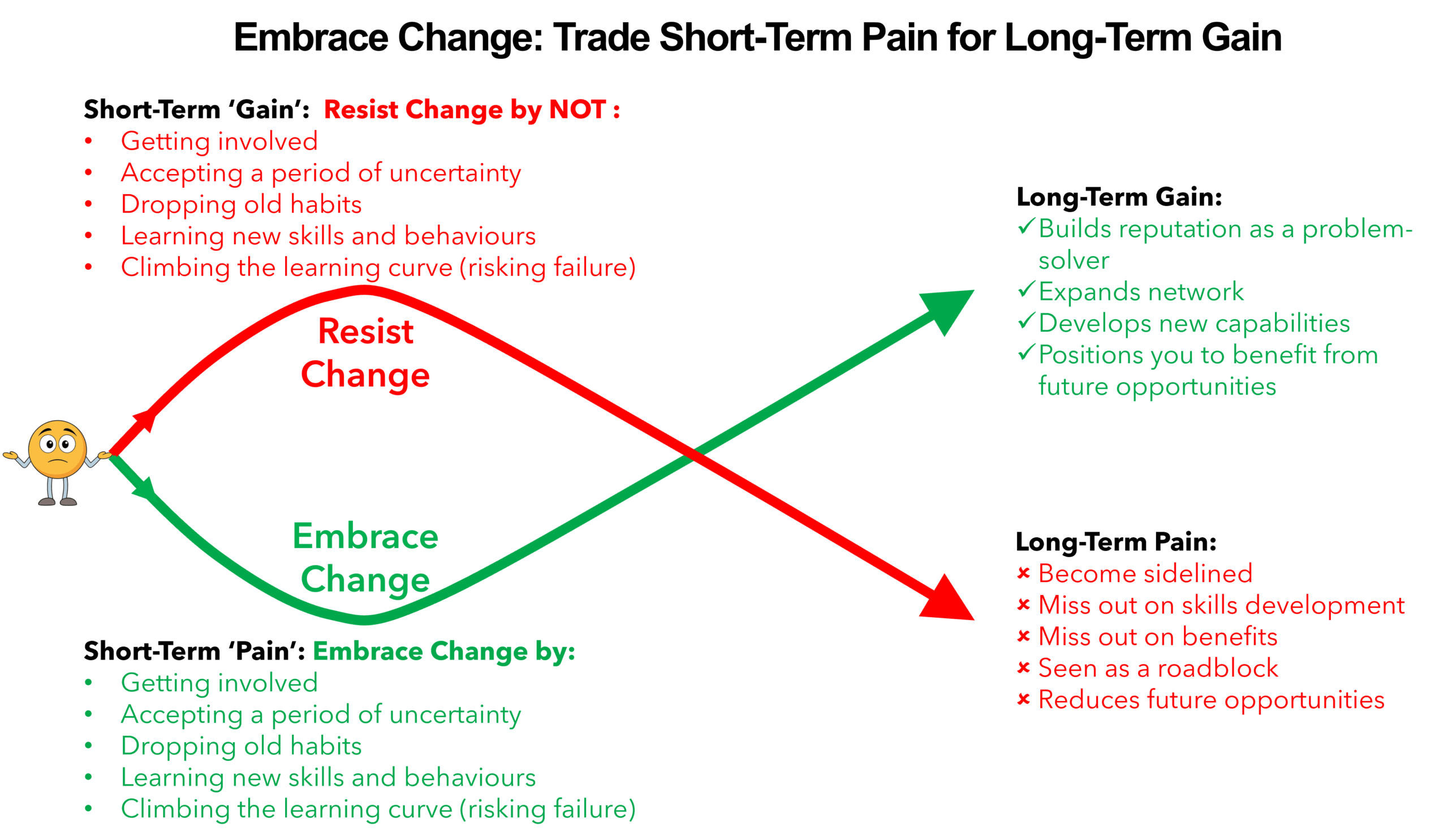
Reacting to Change
When individuals are dropped into change with little preparation, their behaviour is often entirely predictable. They pause, wait for certainty, cling to familiar ways of working and quietly reduce their exposure to risk. From their perspective, this makes sense. In uncertain conditions, minimising short-term disruption can feel like the safest and most rational response.
What I have repeatedly observed, however, is that something shifts when people are introduced early to a simple but powerful idea: meaningful change almost always involves exchanging short-term comfort for longer-term benefit. When this is made explicit upfront, people are no longer just reacting — they are choosing.
Seen through this lens, discomfort takes on a different meaning. Ambiguity, learning curves and temporary inefficiencies stop being interpreted as signs that the change is poorly designed. Instead, they are understood as normal features of transition. That reframing matters. It allows people to engage with change knowingly rather than defensively.
Addressing the Issue
In organisations where this thinking is surfaced early, behaviour tends to move more quickly. People participate sooner, test ideas earlier and are less attached to practices that no longer serve them. They become more open to experimentation because they can see what the effort is building towards: deeper capability, broader relationships, increased influence and stronger future opportunities.
This approach doesn’t magically remove resistance, nor should it. Skepticism and caution have a role to play. But I have seen time and again that when people understand the underlying shape of change in advance, they are far more willing to invest through the awkward early stages instead of opting out. Embracing Change Means Trading Short-Term Pain for Long Term Gain.
Conclusion
Change is not something that simply happens to people.
The way it is framed beforehand shapes how people respond.
And often, providing a shared way of understanding the trade-off is enough to help people step towards a more constructive, long-term path.
#ChangeManagement #OrganisationalChange #PeopleLedChange #ChangeLeadership