Everyone knows the story of Scrooge in Dicken’s A Christmas Carol (or the Muppets version!). In it Scrooge is visited by the Ghosts of Christmas Past, Present and Future. As a result he be
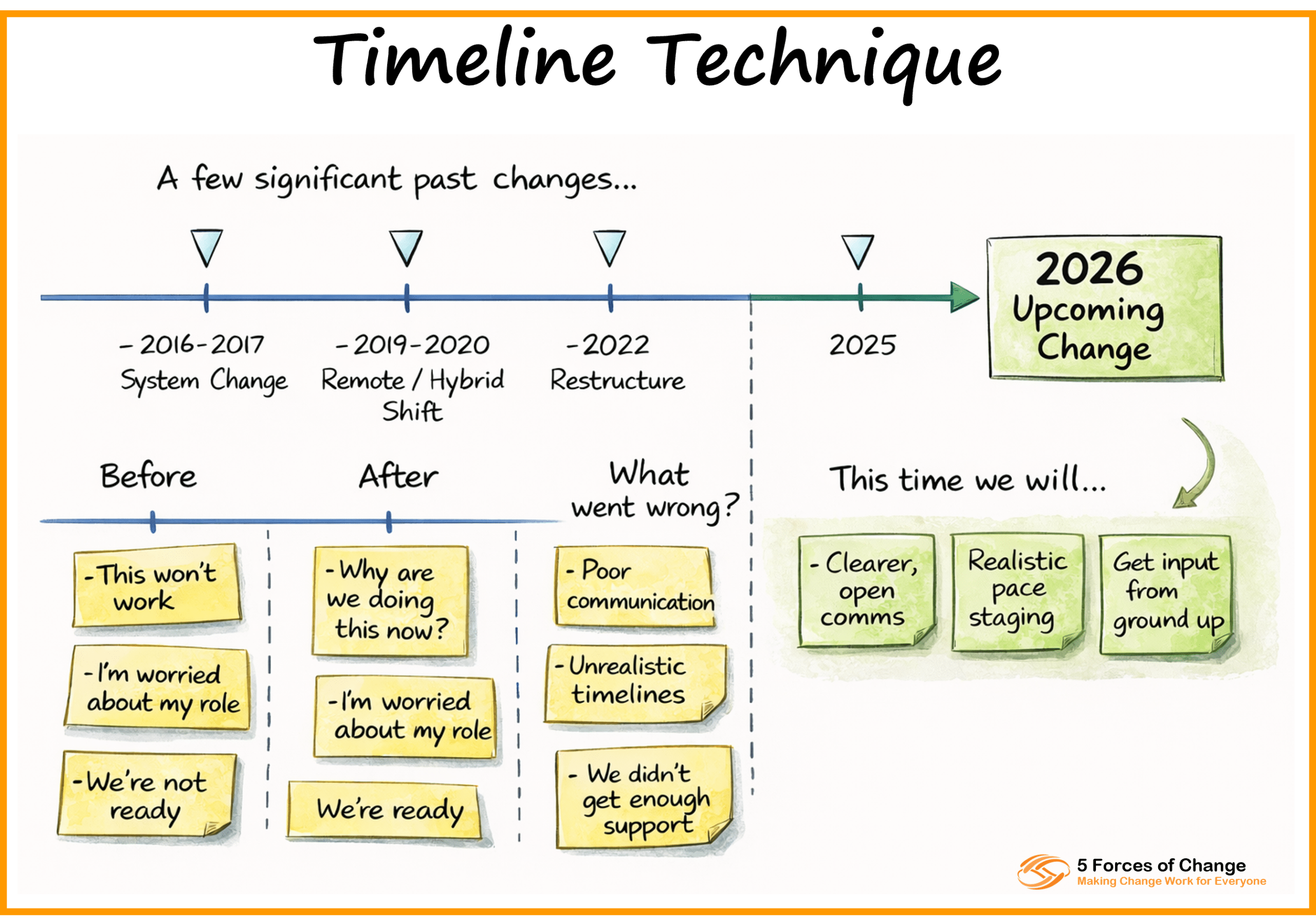
Horizontal timeline listing changes past, present and future. Plus how people responded to each and what can we do differently this time.
comes a changed man. This is the most well known version of the timeline technique.
A work we so often struggle with change. It pays to look to the past for lessons and a longer term perspective before taking a good look at where we are right now so we can celebrate rather than mourn the future. This is where the Timeline Technique comes in. One of the most effective ways I’ve seen leaders help people engage with an upcoming change is simple: put it on a timeline exploring the emotions and legacy of past changes to help us prepare for the latest chapter of change.
Look back at a few major changes people have already lived through. Perhaps a new system, a restructure or new ways of working. Gather your colleagues and ask yourselves three questions.
1️⃣ How did you feel before the change?
People remember this clearly:
- Uncertainty
- Loss of control
- “This won’t work”
- “Why now?”
2️⃣ How did it feel once the change was embedded?
This is the reset moment:
- Anxiety faded
- New habits formed
- Benefits appeared
- And almost no one wants to go back
What once felt disruptive is now normal.
This naturally leads to action-focused insight:
- What helped us get through it?
- What should we repeat this time?
3️⃣ What went wrong — and what still frustrates you?
This step matters more than it sounds.
By naming poor communication, unrealistic timelines, or lack of support, people can finally exorcise the demons of past change.
Not to blame.
But to make sure old mistakes don’t quietly shape the next one.
When this sits on a single timeline, three things happen:
👉 Confidence grows (“we’ve done this before”)
👉 Perspective improves (“the fear didn’t last”)
👉 Practical actions emerge for the next change
Instead of change feeling like something done to people, the focus shifts to:
“What will we do differently this time to reduce stress and make it work?”
Sometimes the best preparation for what’s coming next
is learning – honestly and collectively – from what’s already behind us.
To learn more about the Timeline Technique see.
#ChangeManagement #OrganisationalChange #PeopleLedChange #ChangeLeadership