The Moment Everything Clicked
One of our most memorable moments as change consultants came unexpectedly. A client burst into our office, practically glowing with excitement. He’d just finished presenting to his executive board and secured approval for a company-wide programme expansion – one that had seemed like a long shot just weeks earlier. How Collaborative Leadership Drives Organizational Change…
Naturally, we wanted to understand his success. His response caught us completely off guard: “I used your Jedi mind trick.”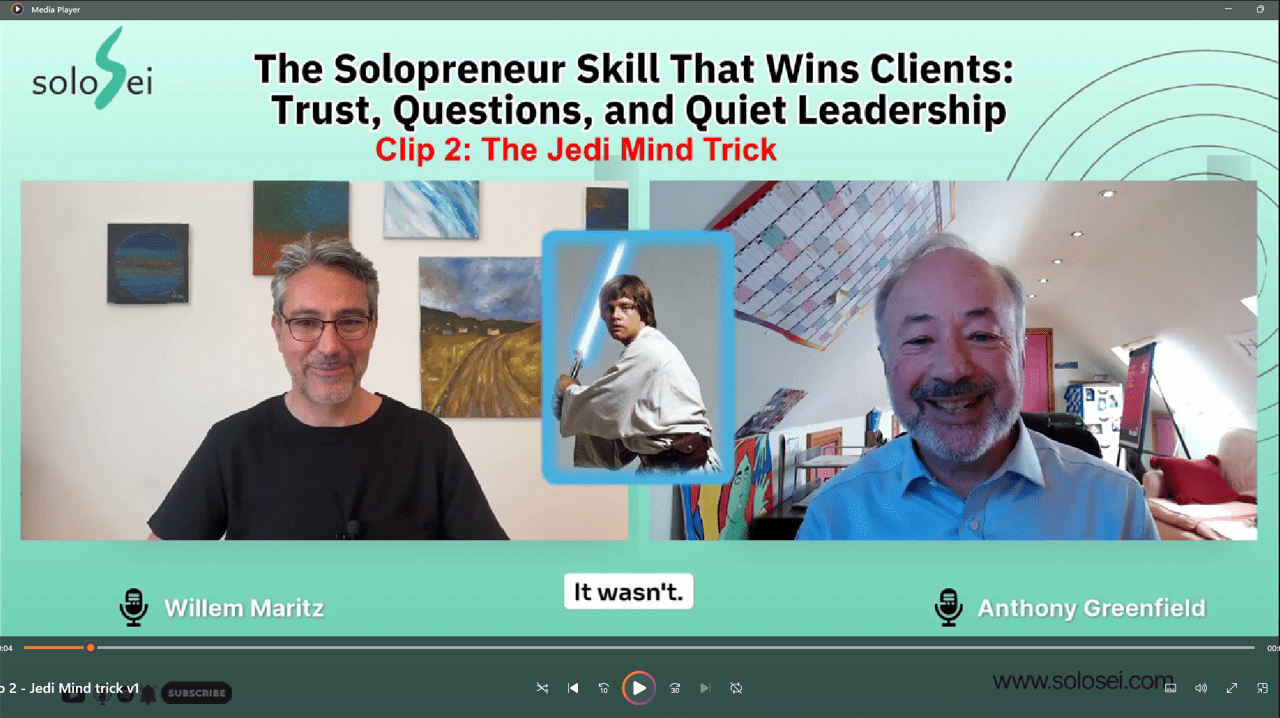
We looked at each other, genuinely puzzled. What Jedi mind trick?
As he walked us through his approach to the board meeting, something remarkable became clear. He hadn’t just applied a technique we’d taught him. He’d absorbed a completely different philosophy about how organizational change actually works—one that contradicts nearly everything traditional management consulting promotes.
Why Traditional Top-Down Consulting Falls Short
The conventional consulting playbook is familiar to anyone who’s worked in corporate environments. External experts arrive with polished PowerPoint presentations, armed with best practices and predetermined solutions. They analyze from a distance, prescribe remedies, and hand over implementation plans before moving on to the next client.
This approach might look professional and efficient on the surface, but it consistently fails to generate lasting change. Here’s why: people instinctively resist being told what to do, especially when the directive comes from someone who hasn’t walked in their shoes.
The Front-Line First Philosophy
Our methodology starts in a completely different place. Rather than beginning with solutions, we begin with questions. Rather than starting in boardrooms, we start on the front line.
We engage directly with the people doing the actual work—the ones who understand the daily realities, challenges, and opportunities that executive teams might not see. We listen deeply. We observe carefully. We seek to grasp the genuine circumstances on the ground rather than imposing frameworks from above.
This isn’t just about gathering information. It’s about building understanding and respect for the complexity of the organization as it actually exists, not as we might wish it to be.
The Art of Guided Discovery
Once we’ve developed this grounded understanding, we move to what our client called the “Jedi mind trick”- though it’s really the opposite of manipulation. It’s about facilitation.
We work alongside leaders and teams to help them see patterns and connections they might not have noticed before. We ask questions that open new perspectives. We create spaces for reflection and dialogue. We share observations that invite deeper thinking.
But here’s the critical distinction: we never force conclusions. We never insist that people adopt our viewpoint. Instead, we guide them through a process of discovery where they can examine evidence, consider implications, and reach their own informed decisions about what needs to change and why.
Why Self-Discovery Beats Persuasion Every Time
The psychological principle at work here is powerful and well-documented. People rarely resist their own ideas. When leaders genuinely discover insights for themselves—when they truly understand why transformation matters through their own analysis and reflection—something fundamental shifts.
They stop being passive recipients of change initiatives. They become active advocates. They take ownership. They find their own voice for articulating why the change is necessary. They walk into executive meetings not because a consultant told them to, but because they believe in what they’re proposing.
This internal conviction shows. It’s evident in their body language, their passion, their ability to handle tough questions, and their persistence when facing obstacles. You simply cannot manufacture this level of commitment through external pressure or slick presentations.
The Investment That Pays Dividends
We’re transparent about one thing: this collaborative approach requires more time on the front end. It demands patience. It calls for genuine curiosity rather than the pretense of expertise. It requires consultants to release their attachment to being “the expert with all the answers” and embrace a more humble, facilitative role.
For organizations accustomed to quick fixes and rapid implementations, this can feel uncomfortable initially. There’s a temptation to skip the discovery phase and jump straight to solutions.
But the return on this investment becomes clear over time. Leaders who go through this process don’t just comply with change initiatives—they commit to them wholeheartedly. They become champions who inspire others. They navigate resistance more effectively because they’ve thought through the rationale themselves. They sustain momentum long after external consultants have left. How Collaborative Leadership Drives Organizational Change…
Creating Conditions for Transformation
The deepest truth we’ve learned about organizational change is this: real transformation doesn’t come from changing people’s minds through force, clever arguments, or authoritative directives.
It comes from creating the right conditions – the space, safety, information, and facilitation – where people can change their own minds. Where they can wrestle with complexity, examine their assumptions, and arrive at new conclusions that feel authentic to them.
This approach respects people’s intelligence and agency. It acknowledges that those closest to the work often have the clearest view of what’s broken and what’s possible. It recognizes that sustainable change must be owned internally, not imposed externally.
Building Your Own Approach to Change Leadership
If you’re leading or supporting change in your organization, consider these principles:
Start with curiosity before conclusions. Spend time understanding the current reality from multiple perspectives before proposing solutions. Ask questions that help uncover root causes rather than jumping to symptoms.
Engage the front line early and authentically. The people doing the work day-to-day have insights that no amount of data analysis can replace. Their buy-in isn’t just nice to have—it’s essential for implementation.
Create space for guided discovery. Rather than presenting complete solutions, facilitate conversations where teams can explore possibilities, weigh trade-offs, and develop shared understanding of what needs to happen.
Let go of ownership over the answers. Your role as a change leader isn’t to have all the solutions – it’s to help others develop solutions they can believe in and execute effectively.
Build advocacy from the inside out. When people discover why change matters through their own exploration and analysis, they become your most powerful champions.
The Long View on Organizational Change
The “Jedi mind trick” our client referred to isn’t actually a trick at all. It’s simply a more respectful, collaborative, and ultimately more effective way of approaching organizational transformation.
It requires patience, humility, and faith in people’s capacity to think critically and embrace necessary change when given the right support. But the results speak for themselves: leaders who run into board meetings with genuine conviction, programmes that gain traction across organizations, and changes that stick long after the initial implementation phase.
The question for any organization facing transformation is not whether change is needed – that’s usually obvious. The question is how to approach that change in a way that builds genuine commitment rather than mere compliance.
We’ve found that when you trust people to reach the right conclusions through guided discovery, they rarely disappoint. And more importantly, they become the kind of change champions that no amount of external consulting could ever create.